Mastering the Twisted Roblox Map: Ultimate Storm Chasing Guide
Explore the vast Keysota landscape in Twisted. Get expert tips on navigating the Twisted Roblox map, intercepting tornadoes, and surviving severe weather.
Published:
Table of Contents
Storm chasing in Twisted is more than just a hobby; it is a high-stakes simulation that demands precise navigation across the complex terrain of the fictional state of Keysota. Understanding the twisted roblox map is your first and most critical step toward becoming a successful storm chaser. Without a solid grasp of the geography, road networks, and storm behavior, even the most advanced vehicles will leave you stranded when a PDS (Particularly Dangerous Situation) tornado strikes.
This guide will break down the essential components of the map, share expert strategies for intercepting supercells, and provide the data you need to survive the most violent weather events in the game. By mastering these routes and environmental factors, you will spend less time guessing and more time capturing legendary footage.
Navigating the Keysota Landscape
The twisted roblox map is vast, characterized by rolling prairies, sprawling farmlands, and dense urban centers like Veroa and Hazelton. Because the weather patterns are dynamic, there is no single "safe" route. Instead, you must learn to read the radar data provided by your vehicle’s systems or community-operated DOW (Doppler on Wheels) trucks.
When playing on this map, you should focus on the "Keysota 41" and "Key 13" corridors, which are popular routes for chasers to maintain mobility while keeping an eye on supercells. Players often make the mistake of sitting in one spot too long. According to community reports, the most successful chasers are those who move in sync with the storm’s trajectory, constantly repositioning to stay ahead of the hook echo.
Key Geographic Landmarks for Chasers
Landmark
Tactical Significance
Why Visit?
Veroa
Urban Center
High property damage allows for epic footage.
Hazelton
High-Risk Zone
Often the target of large, multi-vortex tornadoes.
Keysota 41
Main Highway
Essential for rapid north-south/east-west travel.
Key 13
Strategic Intersect
Perfect for observing storm structure safely.
Strategy: Interception vs. Observation
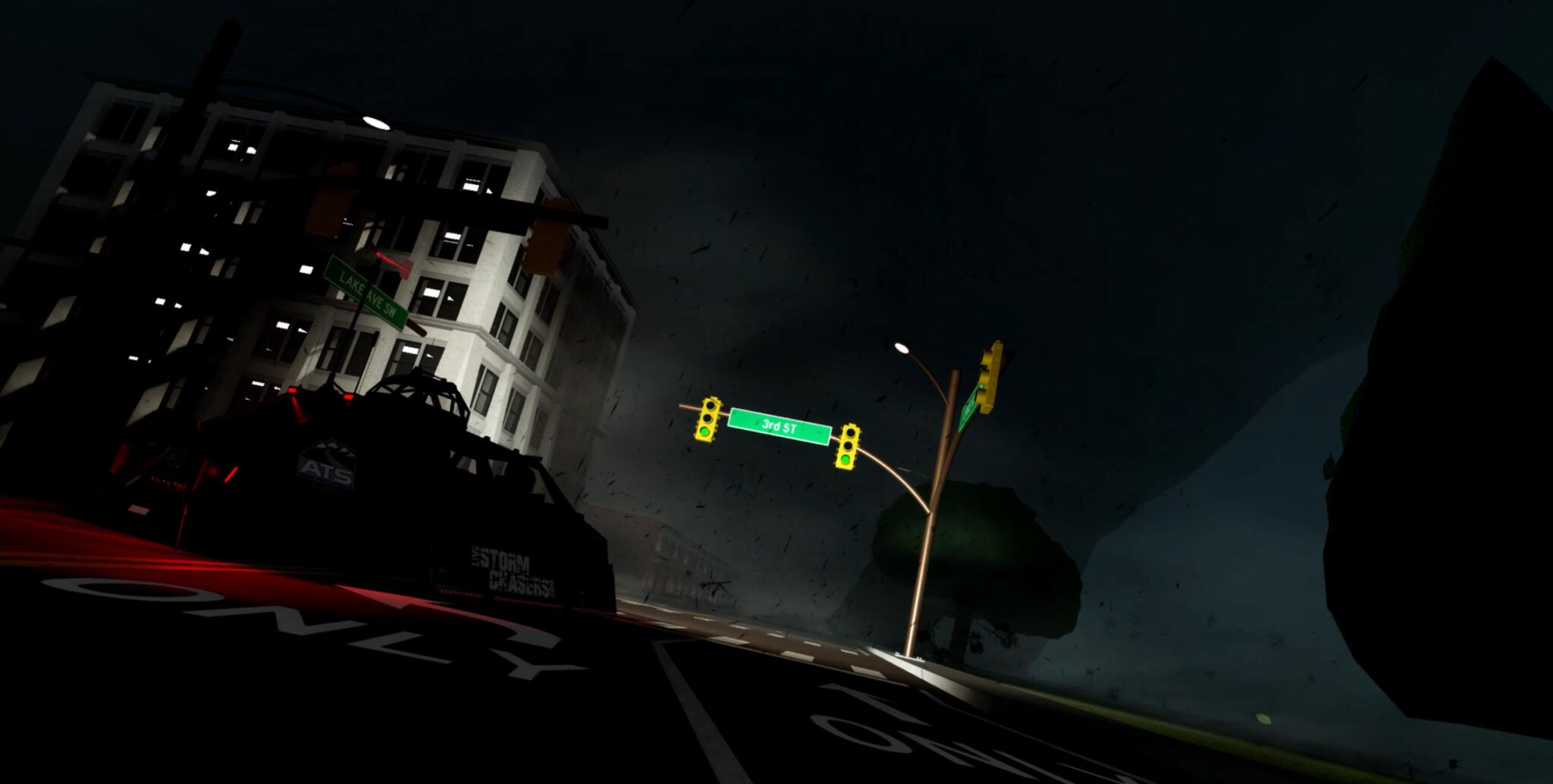
Deciding when to intercept a tornado is the hallmark of an elite chaser. A common error among beginners is attempting an intercept with an under-equipped vehicle. As seen in recent Twisted gameplay, using a TIV (Tornado Intercept Vehicle) requires specific timing—deploying front and side flaps is crucial for stability when winds exceed 150+ mph.
If you are a novice, start by observing from a distance. Use the free-cam feature to study the wall cloud's rotation. Look for "sub-vorts" or rapid condensation, which often signal that the tornado is tightening and likely to intensify. Once you are comfortable reading the storm's intensity, you can begin to time your intercepts based on the velocity (TVS) readings shown on your radar.
Check your velocity readings
Never attempt a close-range intercept if your radar shows purple or pink pixel velocity. These colors indicate wind speeds that will easily loft even the heaviest armored vehicles.
The Evolution of Intercept Vehicles
In Twisted, your choice of hardware is as important as your map knowledge. Different era-specific TIVs have unique deployment times. For example, modern TIVs are engineered for faster deployment, which is a lifesaver when you realize a wedge tornado is shifting unexpectedly.
Vehicle Performance Comparison
TIV Variant
Deployment Time
Best Use Case
2008 TIV 2
Slow (Manual Flaps)
Classic chase scenarios.
2015 TIV 2
~27 Seconds
High-risk, slow-moving storms.
2025 TIV 2
Fast (Dual-Side)
Rapid, unpredictable tornadoes.
TIV 1
Moderate
Historical/documentary roleplay.
Community Experience: Many players recommend the 2025 variants for high-stakes chasing because the simultaneous deployment of side flaps provides a wider window of safety, significantly reducing the chance of being "lofted" or disintegrated by strong inflow winds.
Advanced Storm Tactics
To truly conquer the twisted roblox map, you must learn how to handle "conjoining" storms. These events are where two separate supercells merge, creating a much larger, more violent storm. During these scenarios, the windfield often expands, catching unprepared chasers off guard.
When storms merge, the safest strategy is to retreat to a primary highway, such as the major routes near Hazelton, and reassess the radar. Do not attempt to stay in the path. Instead, look for a clearing where you can deploy a probe. Probes are vital for gathering the 200+ mph wind speed data required for high-tier progression. If you place a probe and it survives, the credit you earn for the data is well worth the risk.
Essential Gear and Preparation
Before heading out, ensure you have your probe kits stocked. Without them, you are just sightseeing. High-performance storm chasing requires a consistent flow of probes and a reliable vehicle. You can visit the Official Twisted Game Page to check for the latest developer updates, as balance changes can frequently affect how vehicles handle wind speeds.
Pre-Chase Checklist
Radar Calibration: Ensure your DOW/Radar dish is angled correctly.
Fuel and Repairs: Always stop by the shop if your chassis takes debris damage.
Route Planning: Pick a target town (e.g., Hazelton or Veroa) before the storm develops.
Communication: If playing with friends, assign one person to navigate and one to read velocity.
FAQ: Frequently Asked Questions
Q: Where can I find the best spots on the twisted roblox map for big tornadoes?
A: Large, violent tornadoes are random but often track through open areas like the prairies near Hazelton and the urban outskirts of Veroa. Focus on keeping your radar clear to spot the purple/pink velocity signatures.
Q: Why is my vehicle getting lofted so easily?
A: You are likely entering the inflow or the core too early. Wait for your radar to confirm the wind speed is within your vehicle's structural limit, and ensure all stabilization flaps are fully deployed before the windfield hits.
Q: What is the fastest way to get credits in Twisted?
A: Successful probe deployments in high-intensity (150+ mph) tornadoes yield the most rewards. Focus on getting accurate data rather than just driving into the funnel and getting launched.
Q: Can I play Twisted on mobile devices?
A: The game is highly intensive and physics-heavy. It will not run well on low-end devices. Use a PC or high-end tablet for the best experience navigating the complex map environment.