Twisted Roblox How to Tell Where a Tornado is Going: Expert Guide
Master storm chasing in Twisted! Learn how to tell where a tornado is going with our expert tips on radar, storm motion, and visual tracking techniques.
Published:
Table of Contents
Chasing storms in Twisted on Roblox is an adrenaline-fueled experience, but many new players often find themselves in the wrong place at the wrong time. If you have ever wondered twisted roblox how to tell where a tornado is going, you are not alone; mastering the art of the perfect intercept requires more than just luck. Understanding environmental cues and utilizing in-game tools is the difference between a successful capture and being caught in the debris field.
In this guide, we will break down the essential mechanics that determine storm movement. Learning twisted roblox how to tell where a tornado is going will allow you to position your vehicle effectively, maximize your rewards, and stay ahead of the storm's unpredictable path.
The Foundation: Storm Motion and Thermodynamics
Before you even see a funnel cloud, the game provides the data you need to predict its trajectory. The most critical tool at your disposal is the thermodynamics panel. By clicking the sun icon, you can access vital information about the atmospheric conditions in your current server.
The "storm motion" indicator is your primary compass. It shows both the direction and speed of the storm system. Since tornadoes in Twisted typically follow the movement of their parent storm, observing this vector early is essential.
Essential Tools for Storm Tracking
Tool
Function
Why it Matters
Thermodynamics Panel
Displays storm speed/direction
Helps you predict the general path before touchdown.
Radar (KHCL/Thib)
Shows precipitation and hooks
Allows you to identify the "hook echo" where rotation occurs.
Base Velocity
Visualizes wind direction
Highlights "couplets" where rotation is most intense.
Warning Polygon
Defines the danger zone
Provides a boundary for expected storm activity.
Mastering Radar Interpretation
If you want to move beyond guessing, you must become proficient with the radar. Many players ignore the subtle cues on the map, but seasoned chasers know that the radar tells a story long before the visual effects appear.
When you open the radar, look for the "hook" shape developing on the storm’s tail. This is the prime location for tornadogenesis. Once you see rotation, toggle to the Base Velocity view. You are looking for a "couplet"—a tight cluster of red and green pixels. Red indicates wind moving away from the radar, and green indicates wind moving toward it. When these colors are packed tightly, a tornado is likely forming or strengthening.
Understanding TVS Colors
Keep an eye on the Tornado Vortex Signature (TVS) icon. The colors indicate the intensity of the storm: Green (35-79 mph) is the baseline, while Pink (140+ mph) signifies an extreme, high-threat tornado.
Visual Tracking Techniques: The "Dead Center" Intercept
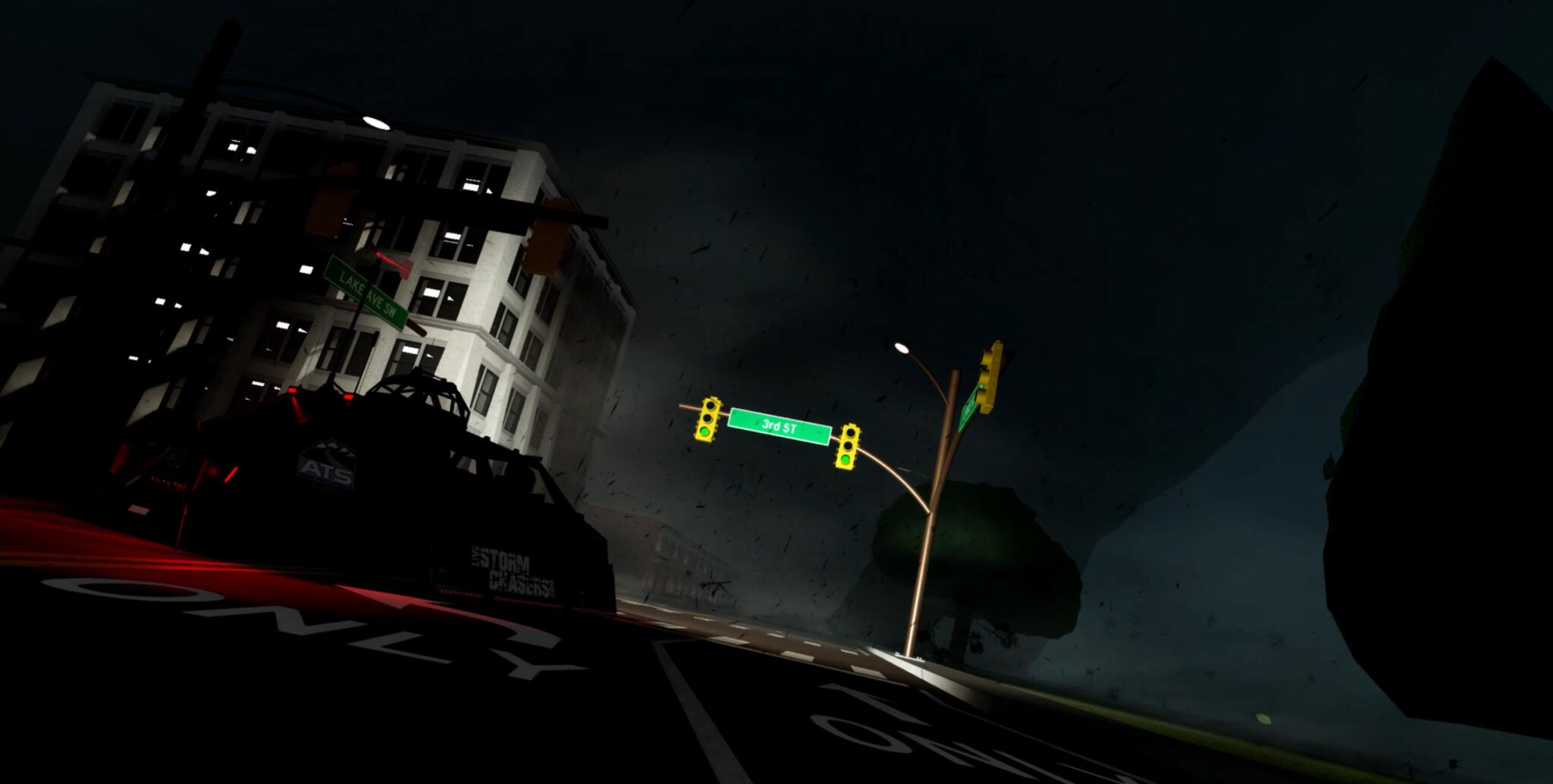
Once you are in the field, your eyes are just as important as your instruments. A common mistake is driving directly toward the tornado. Instead, you should aim to place yourself perpendicular to the storm's motion vector.
To determine if you are in the right spot, use this simple visual trick:
Center your camera so your vehicle and the tornado are perfectly aligned in the middle of your screen.
Watch the drift: If the tornado drifts to the left of your center line, it will likely pass behind you—back up to adjust.
If it drifts to the right, it will likely cross in front of you—move forward to maintain your position.
If it remains stationary in your vision while growing larger, you are in the "sweet spot" for a direct intercept.
Strategic Positioning and Deployment
Timing is everything. One of the most important lessons shared by the Twisted Official community is the importance of patience. Many players attempt to intercept as soon as a funnel touches down, but waiting for the storm to strengthen often leads to significantly higher payouts and better gameplay footage.
Tornado Deployment Stages
Stage
Action
Risk Level
Early Development
Position near the hook
Low
Strengthening
Monitor wind shifts
Medium
Full Maturity
Deploy equipment
High
Dissipation
Exit the area
Low
Be aware that tornadoes are "deviant" in nature; they rarely move in a perfectly straight line. Always be prepared to make minor adjustments to your vehicle's position. If you notice a sudden wind shift—which you can often feel through your vehicle's handling or see on the radar—it is a sign that the tornado is pivoting.
Common Mistakes to Avoid
Even experienced players can get "dusted" if they become complacent. Avoid these common pitfalls to improve your success rate:
Ignoring the Halfway Point: Tornadoes often exhibit erratic behavior or sudden shifts after crossing the halfway point of the warning polygon. Stay alert during this phase.
Over-relying on Radar: While radar is powerful, it is an estimate. Use it in conjunction with visual confirmation to ensure you aren't chasing a phantom signal.
Poor Deployment Timing: Deploying too early in a weak storm won't yield the best results. Wait for the funnel to stabilize and grow.
Frequently Asked Questions (FAQ)
How do I know exactly where a tornado is going in Twisted?
You should combine the storm motion vector from the thermodynamics panel with the base velocity radar. By staying perpendicular to the storm's path and watching for visual drifting, you can predict its trajectory accurately.
What is the best way to use the radar for intercepts?
Focus on the Base Velocity mode to find couplets (tight red and green areas). This is where the rotation is strongest. Once you see a TVS icon, use your ruler tool to estimate the path, but remember to adjust as the storm moves.
Why does my tornado keep shifting direction?
Tornadoes in Twisted are programmed to be deviant. They rarely travel in a straight line for their entire life cycle. Always keep your vehicle mobile so you can adjust your position if the storm pivots unexpectedly.
Should I chase every tornado I see?
Not necessarily. Focusing on high-intensity storms (indicated by orange, red, or pink TVS icons) will provide a more rewarding experience and help you refine your intercept skills more effectively than chasing every small rotation.