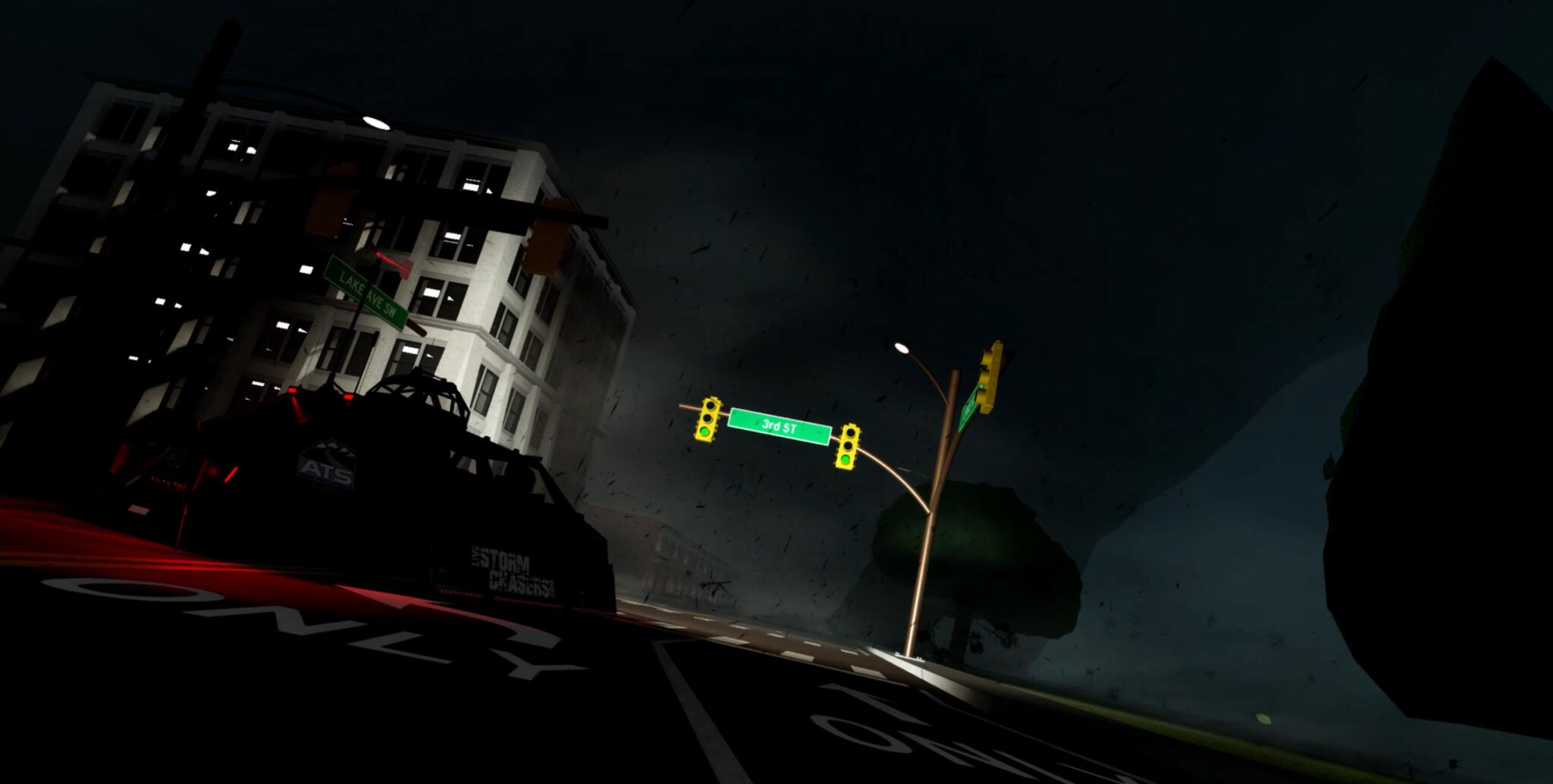
Twisted Roblox: Claws vs Spikes - Which Interceptor is Best?
Discover whether claws or spikes are better for your interceptor in Roblox Twisted. Learn vehicle defense mechanics to survive massive tornadoes.
Published:
Table of Contents
When chasing massive storms in Roblox Twisted, your choice of vehicle deployment can be the difference between a successful data collection mission and being tossed into the wind. The ongoing debate regarding twisted roblox claws vs spikes is a hot topic among veteran storm chasers who need to decide which defensive mechanism provides the best stability during high-risk intercepts.
Understanding the mechanics of these systems is crucial because not all interceptors perform the same under extreme pressure. In this guide, we will analyze the performance of various vehicles, helping you decide whether to rely on claw-based deployment or spike-based anchoring for your next major storm chase.
The Mechanics of Tornado Interception in Twisted
In Roblox Twisted, your goal is to get as close to a tornado as possible to deploy your instruments. Whether you use claws or spikes, the primary function of these systems is to increase your vehicle's weight and drag, preventing the tornado's wind field from lifting or sliding your vehicle.
Based on community reports, many players initially assumed that the classic claw systems found on vehicles like the TIV 1 were superior due to their fast deployment speeds. However, as storms increase in intensity—reaching EF5 status with multi-mile widths—the physics of the game often favor a more permanent ground connection.
Claw vs. Spikes: Performance Overview
Feature
Claw-Based (e.g., TIV 1)
Spike-Based (e.g., TIV 2 / Armadillo)
Deployment Speed
Very Fast
Moderate
Ground Grip
Moderate (Surface level)
High (Piercing)
Best Used For
Quick tactical positioning
Stationary heavy-duty intercepts
Survival Rate
Lower in EF4+ storms
Higher in EF5 storms
Optimize Your Intercept
Always wait for your vehicle to fully deploy before the tornado core hits. Attempting to deploy while already in high-velocity winds often results in the vehicle being picked up regardless of your defense mechanism.
Why Spikes Outperform Claws in High-Risk Chases
Through extensive testing and community-shared experiences, it has become clear that spikes provide a more reliable anchor. When you deploy spikes, the vehicle effectively locks into the game's terrain grid. This is particularly useful when intercepting massive, long-track tornadoes where the wind field can easily drag a vehicle that isn't firmly attached to the ground.
The TIV 2, which utilizes a spike-based system, is widely considered the gold standard for players looking to survive the most intense, pink-TVS level storms. While claws offer a faster setup, they often fail to keep the vehicle in place once the wind speeds cross the 180 mph threshold.
Spike Count and Survivability
According to data collected from various high-stakes chases, the number of spikes your vehicle possesses directly correlates to its ability to remain stationary during an intercept.
0 Spikes: Extremely high risk; almost guaranteed failure in EF3+ events.
2 Spikes: Better than nothing, but struggles against the core of a mature tornado.
4 Spikes: The recommended threshold for consistent success in major storms.
6 Spikes: Offers the highest stability, making the Armadillo a top-tier choice for extreme chasers.
Evaluating Popular Vehicles: The TIV Series
The comparison between the TIV 1 and TIV 2 is a perfect case study for the claws vs spikes debate. The TIV 1’s claw deployment is visually iconic, but as players have noted, it often acts more like a stabilizer than a true anchor. In reality, the hydraulics of the claws in the game provide limited resistance against the sheer power of the largest tornadoes.
Conversely, the TIV 2 and the newer models like the Armadillo focus on driving metal spikes deep into the surface. If you are serious about storm chasing in the Official Twisted Game, upgrading to a spike-based vehicle is one of the most impactful decisions you can make to improve your data collection consistency.
Choosing Your Interceptor
New Chasers: Start with a vehicle that has at least two spikes to learn the timing of deployments.
Intermediate Chasers: Transition to four-spike vehicles like the TIV 2 to handle more significant wind fields.
Professional Chasers: Invest in six-spike vehicles like the Armadillo for the best chance of survival during core intercepts.
Common Mistakes During Interception
Even with the best spike-equipped vehicle, players often fail due to errors in judgment. The most common mistake is failing to account for storm motion. If a tornado is moving faster than your deployment time, you will inevitably end up in the "barreled" position—where you are stuck in front of the storm and pushed by the inflow winds.
Another issue is ignoring the "TVS" (Tornado Vortex Signature) levels. Don't risk a high-stakes intercept on a green or yellow TVS storm if your goal is testing your vehicle's limit. Wait for the storm to reach red or pink TVS to truly judge if your choice of twisted roblox claws vs spikes is effective.
Data Collection and Instrument Deployment
Once you have secured your vehicle, your next step is successfully deploying your probes. Many players forget that the vehicle itself is only half the battle. You need to ensure your probes are placed in the path of the tornado.
Placement: Always try to place your probes slightly to the right of the tornado's path if it is moving Northeast.
Multiple Probes: If your vehicle allows it, drop multiple probes to ensure at least one captures high-velocity data.
Timing: Never jump out to place a probe if your vehicle is already sliding. Wait for the anchor (claws or spikes) to fully engage.
Avoid the River Zone
Certain areas of the map, specifically near Hibbing, contain terrain features like rivers that can cause pathing issues for tornadoes. Avoid these areas when trying to get a perfect intercept, as they make it difficult to position your vehicle effectively.
FAQ: Mastering Interception in Twisted
Which is better for surviving an EF5 tornado: claws or spikes?
Spikes are significantly better. Data shows that vehicles with 4 or 6 spikes have a much higher success rate in extreme wind speeds compared to claw-based vehicles, which tend to slide during high-intensity core hits.
Do I need a 6-spike vehicle to succeed in Twisted?
Not necessarily, but it helps. While 4-spike vehicles like the TIV 2 are more than capable of surviving massive wedge tornadoes, the Armadillo (with 6 spikes) offers a higher margin of safety if your positioning is slightly off.
Why does my vehicle still flip over even with spikes?
You are likely deploying too late. If the wind speed has already exceeded your vehicle's threshold before the spikes fully anchor into the ground, the physics engine will likely treat your vehicle as a loose object. Try to deploy further away from the core before the wind hits peak speeds.
Where can I find more tips for storm chasing?
For the most accurate and up-to-date gameplay mechanics, always check the Official Twisted Game page on Roblox and keep an eye on community-led wikis for vehicle statistics.