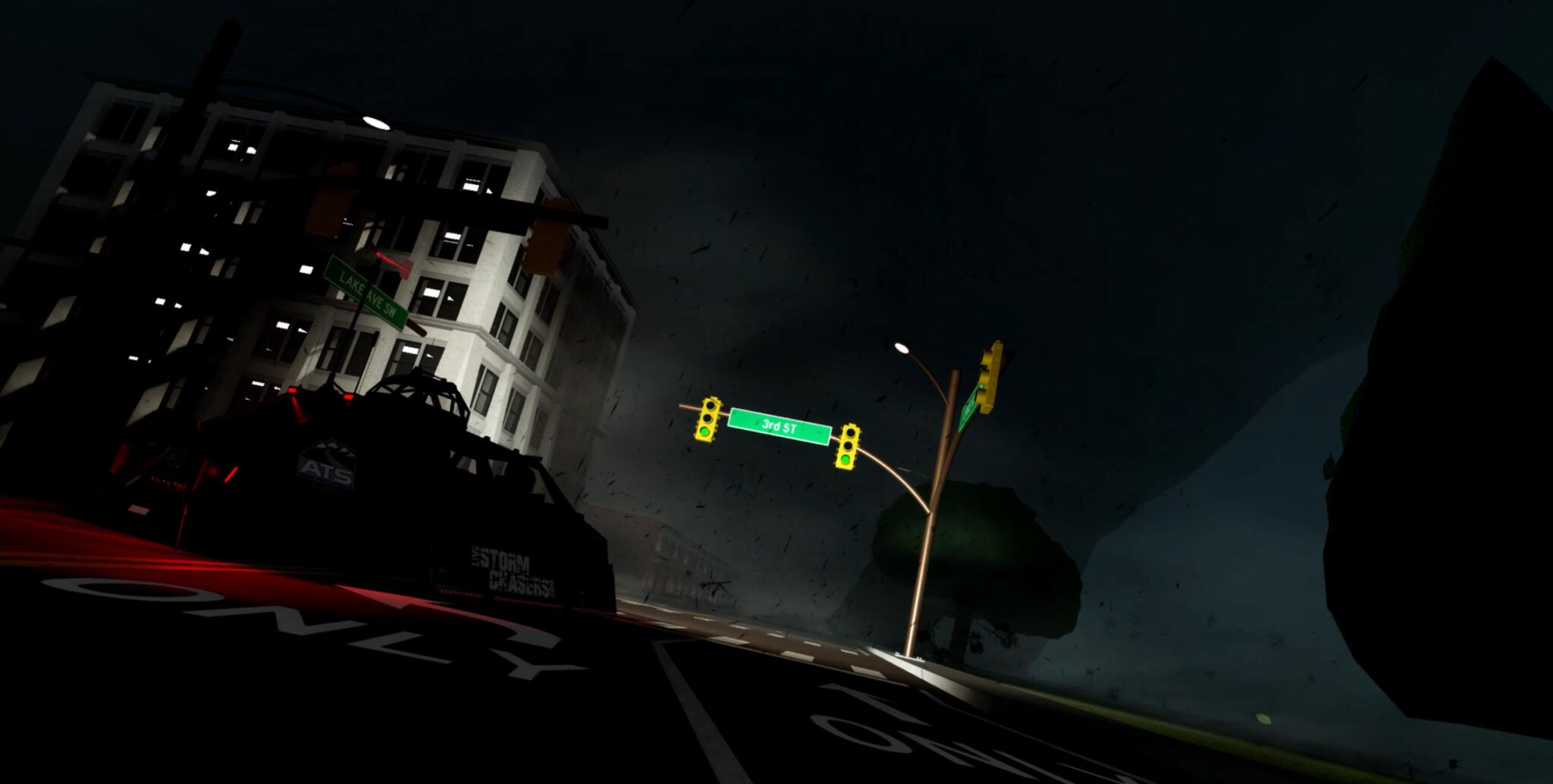
Master the Twisted Roblox Windbreaker 2 wind resistance limits. Learn how to survive EF5 tornadoes with our detailed vehicle stats and intercept tips.
Published:
Table of Contents
Chasing the most violent storms in the virtual world requires more than just guts; it requires the right engineering. For veteran players of the popular Roblox storm-chasing simulator, the twisted roblox windbreaker 2 wind resistance is a topic of intense debate and critical importance. When a mile-wide wedge tornado is barreling toward you at 80 miles per hour, knowing exactly how much force your vehicle can withstand before becoming airborne is the difference between a successful data collection mission and a trip back to the respawn screen.
In the high-stakes environment of Twisted [BETA], developed by Twisted Official, the Windbreaker II stands as a pinnacle of interceptor technology. However, even this beast has its breaking points. Understanding the nuances of twisted roblox windbreaker 2 wind resistance allows players to push the limits of storm chasing, positioning themselves in the "eye of the beast" to record wind speeds that would shred lesser vehicles. This guide breaks down the technical specifications, community-reported survival thresholds, and tactical deployment strategies for the Windbreaker II.
The Engineering of the Windbreaker II
The Windbreaker II isn't just a truck; it is a specialized mobile laboratory designed to withstand the most extreme atmospheric conditions found in the game. Unlike standard chaser vehicles, the Windbreaker II features a heavy-duty chassis, reinforced plating, and specialized deployment systems designed to keep the rubber on the road when the pressure drops and the winds howl.
According to community reports and gameplay analysis, the transition from the original Windbreaker to the Mark II version brought significant improvements in weight distribution and aerodynamic stability. In the world of Twisted, mass is your best friend. The Windbreaker II utilizes a low center of gravity to resist the lifting force generated by the intense low pressure at a tornado's core.
Key Structural Features
Reinforced Augers: These ground-penetrating spikes are essential for anchoring the vehicle during an intercept.
Hydraulic Flaps: These aerodynamic components help redirect airflow over the vehicle, pressing it down into the pavement rather than allowing air to get underneath the chassis.
Heavyweight Chassis: The sheer mass of the Windbreaker II makes it significantly harder for subvortices to "yoink" the vehicle compared to the lighter scout cars.
When discussing twisted roblox windbreaker 2 wind resistance, we must look at the raw data collected by the community during high-risk outbreaks. In Twisted, wind resistance isn't a static number; it is a dynamic interaction between the vehicle's deployment state, the tornado's intensity, and the presence of subvortices.
Based on extensive player testing during the "100 Million CAPE" events, the Windbreaker II shows remarkable resilience. Players have documented successful intercepts in winds exceeding 200 mph, with the vehicle remaining stationary even as debris from nearby houses is lofted into the sky. However, there is a clear "danger zone" where the laws of physics—and the game's engine—begin to favor the tornado.
Wind Speed Range
Expected Vehicle Behavior
Survival Probability
0 - 150 mph
Stable; minor shaking; flaps and augers highly effective.
99%
150 - 220 mph
Significant shaking; vehicle may slide slightly on the road.
90%
220 - 260 mph
Critical vibration; high risk of being struck by heavy debris.
60%
260 - 280 mph
Threshold limit; vehicle prone to being lofted if hit by a subvortex.
30%
280+ mph
Extreme danger; lofting and "instant death" scenarios common.
<10%
Quick Survival Answer
The twisted roblox windbreaker 2 wind resistance typically caps out between 270 mph and 276 mph. While some players have survived spikes up to 280 mph, exceeding 276 mph often results in the vehicle being lofted, leading to catastrophic failure.
Deployment Mechanics: Flaps, Augers, and Airbags
To reach the maximum twisted roblox windbreaker 2 wind resistance, a player must master the deployment sequence. Simply parking in the path of a tornado is not enough. You must actively engage the vehicle's defensive systems to counteract the tornado's inflow and upward vertical velocity.
The Deployment Sequence
Positioning: Aim to be directly in the path or slightly on the "strong side" (usually the right side relative to the tornado's motion).
Augers Down: Engaging the augers provides the primary mechanical link to the ground.
Flaps Engagement: Deploying the aerodynamic flaps reduces the lift coefficient.
Airbag Adjustment: Lowering the suspension via airbags minimizes the gap between the chassis and the road, preventing air from rushing underneath.
Component
Function in Storm Resistance
Community Tip
Augers
Anchors the vehicle to the terrain.
Always deploy on flat pavement for maximum grip.
Flaps
Redirects wind to create downforce.
Essential for winds over 180 mph.
Airbags
Lowers the vehicle profile.
Helps prevent the "flip" effect caused by subvortices.
Case Studies: The 100 Million CAPE Outbreaks
Community chasers often push the twisted roblox windbreaker 2 wind resistance to its absolute limit during special events where thermodynamic values are boosted. In one notable community report, a group of chasers encountered a "monster wedge" tornado with recorded wind speeds of 293 mph.
In this scenario, even with full deployment, several Windbreaker II units were lofted. One player noted, "I got a 274 mph spike and stayed on the ground, but my friend at 276 mph got yoinked." This suggests that the game's physics engine has a very tight threshold for vehicle weight vs. wind lift. The presence of subvortices—smaller, faster-spinning vortices within the main tornado—can briefly spike wind speeds by 50-100 mph, which is often what kills an interceptor vehicle.
The Hazelton Incident
During an outbreak near the town of Hazelton, chasers recorded the Windbreaker II taking a direct hit from an EF5. The vehicle recorded 239 mph and survived, despite debris from a nearby mobile home park flying horizontally across the road. This demonstrates that when positioned correctly, the Windbreaker II is arguably the most reliable platform in the official Twisted game.
Comparative Analysis: Windbreaker II vs. Competitors
While the Windbreaker II is a fan favorite, it isn't the only interceptor on the market. How does the twisted roblox windbreaker 2 wind resistance stack up against other heavy hitters like the Joker series or specialized Medic vehicles?
Vehicle Name
Max Survival Speed (Est.)
Mobility
Cost/Accessibility
Windbreaker II
275 mph
Moderate
High (End-game)
Joker 1
260 mph
Low
High
Joker 2
280 mph
Very Low
Extreme
Dominator (Custom)
290 mph
Very Low
Event-Specific
As seen in the table, the Windbreaker II offers a balanced profile. While the Joker 2 might have a slightly higher weight-to-wind ratio, the Windbreaker II’s mobility allows chasers to reposition more quickly if a tornado "jogs" (suddenly changes direction). In the fast-moving storms of the Prior Lake region, that extra mobility is often more valuable than an extra 5 mph of wind resistance.
Tactical Positioning and Subvortex Avoidance
Maximizing your twisted roblox windbreaker 2 wind resistance isn't just about the truck; it's about where you put it. The "core" of a tornado isn't a uniform circle of wind. It is a chaotic environment filled with RFD (Rear Flank Downdraft) surges and subvortices.
The "Strong Side" vs. "Weak Side"
In most Twisted tornadoes, the right side of the funnel (relative to its direction of travel) contains the highest wind speeds because the tornado’s forward motion adds to the rotational velocity. If you are testing the twisted roblox windbreaker 2 wind resistance, the right-hand side is where you will find the record-breaking numbers, but it is also where you are most likely to be lofted.
Dealing with Subvortices
Subvortices are the "Windbreaker killers." These small, intense mini-tornadoes can appear and disappear in seconds. A Windbreaker II might be perfectly stable in 200 mph winds, only to be struck by a subvortex that instantly ramps the speed to 310 mph.
Subvortex Survival
If you see multiple "dust whirls" spinning around the main funnel, you are dealing with a multi-vortex tornado. In these cases, it is safer to deploy 50-100 yards further away from the center than you would for a "stovepipe" or "cone" tornado.
Maintenance and Repair: The Hidden Factor
A common mistake chasers make is neglecting vehicle health. The twisted roblox windbreaker 2 wind resistance is significantly compromised if the suspension or chassis is damaged.
In community-shared footage, chasers have noticed that a Windbreaker II with 0% suspension health (due to previous crashes or debris hits) behaves much more erratically in high winds. The vehicle tends to bounce more, which allows air to get under the chassis, negating the effect of the airbags and flaps.
Recommended Maintenance Schedule
Post-Intercept Check: Always visit a repair station after a direct hit. Even if the truck looks fine, the suspension "HP" may be low.
Tire Health: Ensure tires are at 100%. Blown tires during a high-wind event will cause the vehicle to slide, often leading to a loss of anchor.
Fuel Management: While not directly related to wind resistance, running out of fuel while trying to escape a 250 mph wedge is a leading cause of chaser fatalities.
Conclusion: Pushing the Limits
The twisted roblox windbreaker 2 wind resistance makes it one of the most formidable tools in any chaser's garage. By combining heavy mass with active aerodynamic systems, it allows players to experience the raw power of an EF5 tornado from a front-row seat. However, chasers must respect the 270-275 mph threshold. Beyond this point, the game's physics become unpredictable, and even the mighty Windbreaker II can be tossed like a toy.
Whether you are chasing for the leaderboard or just for the thrill of the roar, mastering the Windbreaker II is a journey of trial, error, and adrenaline. Stay grounded, keep your augers deep, and always keep one eye on the radar for those deadly subvortices.
</hr>
FAQ: Windbreaker II Wind Resistance
What is the maximum wind speed the Windbreaker 2 can survive?
Based on community reports and gameplay data, the twisted roblox windbreaker 2 wind resistance limit is approximately 274-276 mph. While some players have survived brief spikes higher than this, sustained winds or subvortices exceeding 276 mph typically result in the vehicle being lofted or destroyed.
Do I need to deploy both augers and flaps to survive an EF5?
Yes. To achieve maximum stability, you must deploy the augers, the aerodynamic flaps, and lower the airbags. Failing to use any one of these components significantly lowers your survival threshold, often making the vehicle vulnerable at speeds as low as 180-200 mph.
Why did my Windbreaker II get lofted at only 220 mph?
This is usually due to one of three factors: poor positioning (being hit by a subvortex not reflected in the main wind speed), damaged vehicle components (especially suspension), or deploying on uneven terrain which allowed air to get underneath the chassis.
How does the Windbreaker II compare to the Joker 2?
The Joker 2 is generally heavier and can sometimes withstand slightly higher wind speeds (up to 280 mph), but it is much slower and less maneuverable. The Windbreaker II is considered the better "all-around" interceptor because it can keep up with fast-moving storms while still offering elite-tier wind resistance.