How to Master the Twisted Roblox Funnel Tornado Mechanics
Learn how to intercept a Twisted Roblox funnel tornado with our expert guide on thermodynamics, vehicle deployment, and professional storm chasing strategies.
Published:
Table of Contents
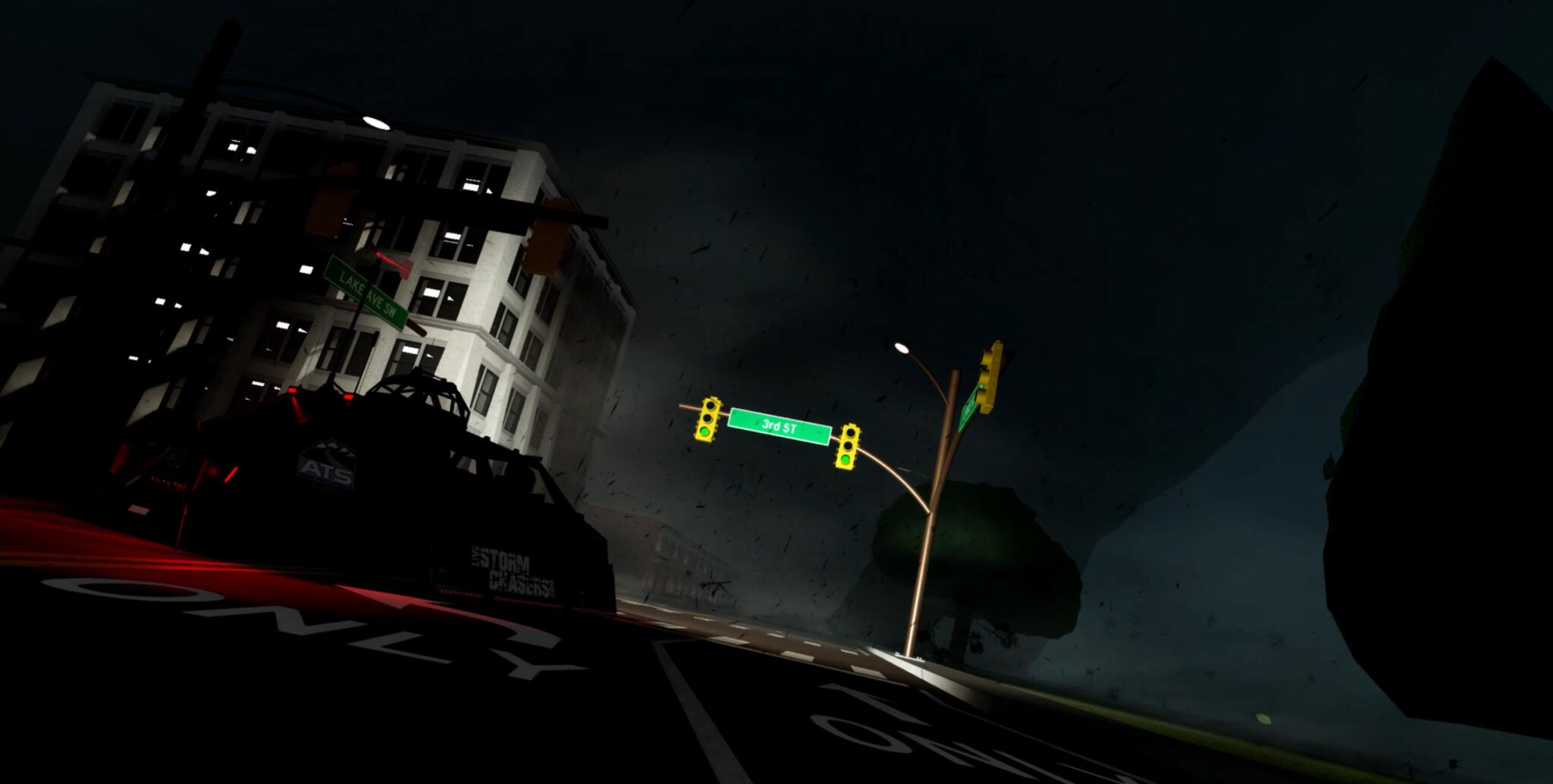
Successfully intercepting a twisted roblox funnel tornado is the ultimate goal for any aspiring storm chaser in this hyper-realistic simulation. Whether you are navigating the high-risk plains in a TIV 2 or scanning the horizon from a DOW 6, understanding the atmospheric ingredients that lead to a twisted roblox funnel tornado is the difference between a successful data harvest and a total vehicle loss. In this guide, we will break down the complex meteorology, vehicle roles, and tactical maneuvers required to master the storm.
Quick answer
To catch a tornado in Twisted, you must monitor the Thermodynamics tab for high CAPE (instability) and SRH (wind shear). Once a storm develops a hook echo on the radar, position your vehicle downstream of the storm's motion to witness the funnel drop and eventual touchdown.
The Science of the Storm: Understanding Thermodynamics
In Twisted, the environment isn't just a backdrop; it is a living, breathing system governed by real-world meteorological principles. To find a twisted roblox funnel tornado, you must first learn to read the "Thermos." These values determine if a storm will be a minor rain shower or a catastrophic EF5 wedge.
The Core Ingredients: CAPE and SRH
Instability and wind shear are the two most critical factors. CAPE (Convective Available Potential Energy) measures the fuel available for the storm. The higher the CAPE, the more volatile the atmosphere becomes. However, fuel alone doesn't make a tornado; you need rotation, which is provided by SRH (Storm Relative Helicity).
Parameter
What it Measures
Effect on Tornadoes
CAPE
Atmospheric Instability
Determines how explosive and robust the storm will be.
SRH
Wind Shear
Crucial for tornado development; higher values lead to violent rotation.
Lapse Rates
Temperature Change with Height
Steeper rates (0-3km) influence tornado intensity and multi-vortex potential.
3CAPE
Low-level Instability
Specifically influences the intensity and structure of the tornado core.
Moisture and Visibility: Pwat and Relative Humidity
A common frustration for players is the "rain-wrapped" tornado. This occurs when Pwat (Precipitable Water) and Relative Humidity are high. According to community reports, Pwat values over 1.5 inches usually result in High Precipitation (HP) storms. In these scenarios, the twisted roblox funnel tornado is hidden behind a wall of rain, making visual chasing extremely dangerous.
Identifying the Funnel: From Wall Cloud to Touchdown
Before a tornado hits the ground, the storm undergoes several visual transitions. Recognizing these stages allows you to deploy your equipment with enough lead time.
The Mesocyclone: The broad rotation of the storm cloud. On the radar, this appears as a "hook" shape on the rear flank of the storm.
The Wall Cloud: A localized lowering from the base of the storm. This is the "pedestal" from which the tornado will drop.
The Funnel Cloud: A rotating cone of condensed water droplets extending toward the ground. At this stage, it is not yet a tornado because it hasn't made contact with the surface.
Touchdown: Once the funnel connects with the ground—or a debris cloud is visible at the surface—it is officially a tornado.
Pro Tip: Watch the Debris
Sometimes a funnel doesn't fully condense to the ground. If you see dust or debris swirling on the surface directly beneath a rotating funnel, the tornado is already on the ground and dangerous.
Vehicle Roles and Intercept Strategies
Chasing a twisted roblox funnel tornado is rarely a solo endeavor if you want the best data. The most successful teams use a convoy system, where each player takes on a specific role to maximize safety and scientific output.
The DOW 6 (Doppler on Wheels)
The DOW is the brain of the operation. The operator must stay mobile, pulling over periodically to scan the storm's velocity. Your job is to tell the other drivers exactly where the "Pink TVS" (Tornado Vortex Signature) is located and where it is heading.
The TIV 2 (Tornado Intercept Vehicle)
The TIV 2 is built to be driven into the tornado. It features heavy armor, lowering flaps, and spikes to anchor it to the road. However, the TIV 2 has a significant weakness: it takes a long time to fully deploy. If the DOW operator doesn't give you enough lead time, you will be lofted before your flaps are down.
The Probe Truck
The Probe Truck carries sensors that must be placed directly in the path of the twisted roblox funnel tornado. The goal is to get a 200+ mph wind reading. This requires nerves of steel, as you must wait until the last possible second to drop the probe and flee.
Vehicle
Primary Tool
Best Strategy
DOW 6
Radar / Velocity Scan
Stay 1-2 miles away; provide constant heading updates.
TIV 2
IMAX Camera / Flaps
Position 0.5 miles ahead; deploy early to avoid being lofted.
Probe Truck
Deployable Sensors
Drop at intersections; use high-speed escapes to avoid the core.
Advanced Forecasting: Reading the Hodograph
For veteran chasers, the Hodograph is the ultimate tool. It maps wind speed and direction at different altitudes. A circular, "messy" hodograph often leads to deviant, short-lived tornadoes that are hard to predict. Conversely, a long, strong, and curved hodograph typically produces long-track, violent tornadoes.
Understanding storm motion is vital for survival. If the hodograph shows a Northeast motion at 58 mph, you cannot afford to linger. You must stay ahead of the storm's path. According to player experience, faster storm speeds make it nearly impossible to "catch up" if you fall behind the rear-flank downdraft (RFD).
The Danger of the RFD
The Rear Flank Downdraft is a region of strong, sinking air behind the tornado. It often contains heavy rain and hail. If you get caught in the RFD, your visibility will drop to zero, and you may be blindsided by a sudden shift in the tornado's path.
Tactical Intercept: A Step-by-Step Guide
To successfully intercept a twisted roblox funnel tornado, follow this tactical sequence used by top-tier community convoys:
Analyze the Risk: Check the top right of the Thermos tab for the STP (Significant Tornado Parameter). An STP of 7-10 is the "sweet spot" for violent but manageable storms.
Pick Your Target: Identify a storm on the radar that is isolated. "Cell interference" can often kill a promising tornado.
The Intercept Point: Look at the storm's motion and pick a paved road intersection 3-5 miles downstream.
Deployment:
DOW pulls over to confirm the rotation intensity.
TIV 2 moves to the projected path and begins the deployment sequence (lowering flaps and spikes).
Probe Truck drops a sensor in the center of the road and moves to a safe distance (the "soft" side of the storm).
The Hit: If positioned correctly, the tornado will pass directly over the TIV 2 and the probe.
Common Chasing Mistakes to Avoid
Even experienced players can lose their vehicles to a twisted roblox funnel tornado if they become complacent. Based on community reports and gameplay analysis, these are the most common errors:
Underestimating Storm Speed: Attempting to deploy a TIV 2 when the tornado is less than a quarter-mile away. The deployment animation takes several seconds; if the wind hits 100 mph before you are finished, you are going for a ride.
Ignoring Pwat: Driving into a high-Pwat storm without a radar. You will drive straight into the wedge without ever seeing the funnel.
Poor Communication: In a convoy, the DOW must be specific. Saying "It's near the lake" is useless. Use road names like "Kinston 41" or "Medina 10" to ensure everyone is on the same page.
Hydroplaning: High-intensity rain makes the roads slick. If you "floor it" during a core punch, you will likely lose control and slide into a ditch, leaving you a sitting duck for the tornado.
The Impact of Risk Levels
Not all days in Twisted are created equal. The game uses a system based on the real-world Storm Prediction Center (SPC) risks. While a "High Risk" day is the most famous for producing massive wedges, "Moderate" or "Enhanced" risks can often produce more photogenic and easier-to-chase tornadoes.
Risk Level
Tornado Potential
Typical Environment
Slight
Low / Brief
High shear but low instability; rain-wrapped.
Enhanced
Moderate
Good balance of CAPE and SRH; reliable funnels.
Moderate
High
Strong ef2-ef3 potential; deviant paths possible.
High
Extreme
Violent EF4-EF5 "monsters"; very fast storm speeds.
To get the most out of your session, visit the official Twisted Roblox page and check the current server's thermodynamics. If the VTP (Violent Tornado Parameter) is above 1.0, you are in for a legendary chase.
Conclusion: Respect the Power of the Funnel
Chasing a twisted roblox funnel tornado is a thrilling test of skill, patience, and meteorological knowledge. By mastering the thermodynamics, coordinating with your team, and respecting the sheer speed of these digital storms, you can capture incredible IMAX footage and record-breaking wind speeds. Remember, the goal isn't just to see the tornado—it's to survive the encounter.
</hr>
FAQ
How do I find a twisted roblox funnel tornado?
To find a tornado, you must join a server and check the Thermodynamics tab. Look for high CAPE and SRH values. Once the sirens go off in towns like Prior Lake or Veroqua, check your in-car radar for a hook echo. Follow the storm's path, and you will eventually see the funnel drop from the wall cloud.
Which vehicle is best for intercepting a twisted roblox funnel tornado?
The TIV 2 is the best vehicle for direct intercepts because its armor and spikes allow it to stay grounded in high winds. However, for gathering data, the Probe Truck is essential. For beginners, the DOW 6 is recommended as it allows you to learn storm behavior from a safe distance.
Why is the tornado invisible in my Twisted game?
If you can hear the roar but can't see the twisted roblox funnel tornado, the storm is likely "rain-wrapped." This happens when the Pwat (Precipitable Water) is high, causing rain to cycle around the tornado's circulation. Use your radar's velocity mode to track its position when visual confirmation is impossible.
What does the "Pink TVS" mean on the radar?
A Pink TVS (Tornado Vortex Signature) on the DOW radar indicates extreme rotation speeds. This usually signals a violent tornado (EF4 or EF5). When you see this, you should exercise extreme caution, as even a deployed TIV 2 can be pushed or damaged by these wind speeds if not positioned perfectly.