Mastering the Twisted Roblox Subvortex: Storm Chasing Guide
Learn how to track the Twisted Roblox subvortex in the 1.22 update. Discover probe placement, vehicle strategies, and how to survive 300 mph EF5 winds today!
Published:
Table of Contents
Storm chasing in the virtual world has reached a fever pitch with the latest updates to one of the most realistic meteorology simulators on the platform. If you are looking to master the twisted roblox subvortex, you need to understand that these aren't just visual effects; they are lethal, high-velocity wind funnels within a larger tornado that can make or break your career as a chaser. The twisted roblox subvortex represents the pinnacle of storm intensity, often appearing during high-CAPE events where the atmosphere is primed for destruction.
Understanding how to identify, track, and intercept these suction vortices is essential for any player aiming to top the leaderboards or secure the elusive EF5 damage rating. Whether you are using the new Tornex probe or piloting a heavy-duty DOM 3, the presence of a twisted roblox subvortex changes the rules of engagement. In this guide, we will break down the mechanics of multiple-vortex phenomena, the best equipment for the job, and the survival tactics used by the community's most experienced chasers.
The Anatomy of a Twisted Roblox Subvortex
In the world of Twisted, a subvortex (often referred to by players as a "suction vortex") is a smaller, intense circulation that rotates around the center of a larger tornado. While a massive wedge tornado might look intimidating, it is often these smaller subvortices that contain the highest wind speeds, sometimes exceeding 300 mph.
According to community reports, these phenomena are most common in "Multi-Vortex" tornado types. When a tornado is in its developmental stage or reaching peak intensity, the central downdraft can cause the main funnel to break into several smaller funnels. In the game's engine, these subvortices are responsible for localized "slabbing"—the complete removal of buildings from their foundations.
Why Subvortices Matter for Probing
If you place a probe in the path of a large tornado but miss the twisted roblox subvortex, you might only record winds of 150-180 mph. However, if a subvortex passes directly over your equipment, the readings can spike into the 200s or 300s, significantly increasing the science data and money you earn.
Feature
Main Funnel (Wedge)
Subvortex (Suction Spot)
Wind Speed
120 - 200 mph
210 - 320+ mph
Damage Potential
EF2 - EF3 (Typical)
EF4 - EF5 (Extreme)
Visibility
Large, debris-filled cloud
Thin, fast-moving "fingers"
Radar Signature
Large Couplet / Pink TBS
Intense Black Pixels (Velocity)
Movement
Predictable along storm path
Rapid, orbital rotation
Quick Answer
A twisted roblox subvortex is a high-speed mini-funnel within a larger tornado. To maximize your score, you must place probes specifically where these "fingers" of wind will pass, rather than just aiming for the center of the debris cloud.
The 10,000 CAPE Event: Priming the Atmosphere
The frequency of the twisted roblox subvortex is heavily dependent on the server's atmospheric conditions. Recently, the "10,000 CAPE Event" (celebrating 100 million visits) has introduced extreme Convective Available Potential Energy levels. CAPE is essentially the fuel for a storm; the higher the CAPE, the more violent the updrafts.
When you join a server with 10,000 CAPE and high SRH (Storm Relative Helicity), the likelihood of a tornado producing multiple subvortices increases dramatically. Players have reported tornadoes growing to over three miles wide, with wind fields so large that escaping them becomes a challenge even in high-end vehicles.
Key Atmospheric Indicators
CAPE (10,000+): Provides the energy for massive vertical growth.
SRH (600+): Indicates high low-level shear, necessary for rotation.
TBS (Pink/Red): On the radar, this indicates a "Tornado Bottom Signature," signaling that a violent funnel is likely on the ground.
Velocity (Black Pixels): When the radar shows black pixels in the velocity view, it indicates wind speeds that exceed the standard color scale—often a sign of a subvortex.
Essential Gear: Probes and Technology
Tracking a twisted roblox subvortex requires more than just luck; it requires the right technology. The 1.22 update brought several new tools to the table, including the "Tornex" probe and improved rocket probes.
The Tornex Probe vs. Twist X
The new Tornex probe (based on real-world "Dominator" style tech) features spikes that anchor it into the ground. While it may not always generate the same income as the classic Twist X tower, its durability in high-wind environments is highly valued by players who want to "set it and forget it" in the path of a monster storm.
Rocket Probes for Distant Intercepts
When a tornado is too violent to approach—such as a 3-mile wide monster in Sylvia or Hazelton—rocket probes are your best friend. These can be launched from the back of a DOM 3 into the core of the twisted roblox subvortex from a safe distance.
Probe Type
Best Use Case
Max Recorded Wind (Community)
Price/Tier
Twist X Tower
Maximum Profit / Direct Hits
315 mph
Mid-Tier
Tornex Probe
High-Wind Stability
312 mph
New (1.22)
Rocket Probe
Dangerous/Wide Tornadoes
280+ mph
Consumable
Vortex Vision
Visual Data / Camera Feed
N/A
Specialized
Vehicle Selection for High-Risk Intercepts
To get close enough to deploy a probe in a twisted roblox subvortex, your vehicle needs to withstand extreme inflow and straight-line winds. The community generally categorizes vehicles into "Chasers" and "Interceptors."
TIFF 2 (The 2025 Model)
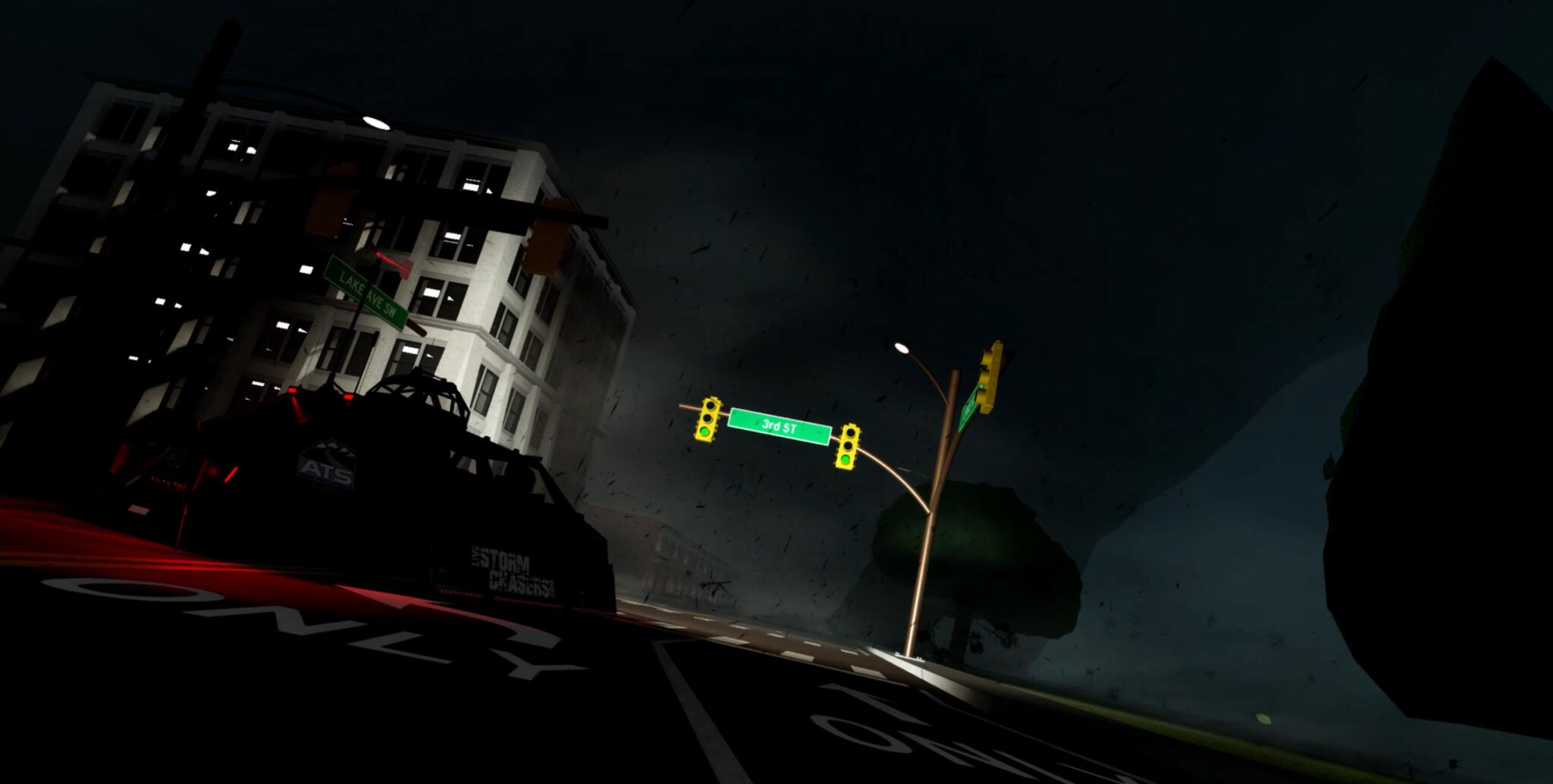
The TIFF 2 is a staple for many chasers. It features deployable flaps that increase downforce, preventing the vehicle from being "lofted" or tossed into the air. However, as many players discovered during the 10,000 CAPE event, even the TIFF 2 can be thrown if it takes a direct hit from a 300 mph subvortex.
DOM 3 (The Heavy Hitter)
For the most violent storms, the DOM 3 is the gold standard. It is heavy, armored, and capable of carrying multiple rocket probes. When a tornado expands to several miles wide, the DOM 3's weight is often the only thing keeping you on the road.
Vehicle
Deployment Type
Stability Rating
Ideal Strategy
TIFF 2
Hydraulic Flaps
8/10
Close-range probe drops
DOM 3
Heavy Armor/Rockets
10/10
Core intercepts & Rockets
Scout SUV
None (Speed only)
3/10
Long-distance spotting
Series 10 Truck
Basic Anchors
6/10
Entry-level chasing
Strategic Deployment: How to Catch a Subvortex
Successfully capturing data from a twisted roblox subvortex requires precise timing. If you deploy too early, the tornado might shift; if you deploy too late, you might be lofted before your anchors engage.
Analyze the Path: Use the K-Hazel radar to track the couplet. Look for the "hook" in the reflectivity and the "bright pixels" in the velocity.
Identify the Suction Spots: As the tornado approaches, look for the smaller, faster-spinning funnels orbiting the main center. This is your target.
The "Pre-Drop" Maneuver: Drive approximately 0.5 to 1 mile ahead of the projected path.
Deployment: Exit your vehicle and place the probe (like the Tornex) directly in the line of the subvortex.
Seek Safety: If you are in a TIFF 2, deploy your flaps immediately. If you are in an unarmored vehicle, drive perpendicular to the storm's path (usually south or north, depending on the storm's motion) to escape the outer wind field.
Pro Tip for Survival
If you find yourself caught in the outer winds of a twisted roblox subvortex and your vehicle starts to lift, try to drive with the wind rather than against it until you can find a road that leads away from the core. Fighting a 140 mph inflow in a light truck is a recipe for a respawn.
Damage Rating and the National Weather Service Role
In Twisted, players can take on the role of the National Weather Service (NWS) to rate the damage caused by a storm. This adds a layer of realism to the game, as you aren't just chasing for points, but for scientific accuracy.
When a twisted roblox subvortex hits a town like Hazelton, it often leaves behind "slabs"—foundations where houses once stood. The NWS job allows you to inspect these areas and assign an EF (Enhanced Fujita) rating.
EF Scale Guidelines in Twisted
EF0 - EF1: Minor roof damage, broken branches.
EF2 - EF3: Significant structural damage, cars overturned, trees snapped.
EF4: Houses leveled, large debris lofted thousands of feet.
A common topic in community forums is the updated lofting physics. In previous versions, being caught in a tornado often meant a simple "Game Over." Now, the wind field is much more dynamic. You can feel the vehicle sliding, the suspension straining, and the terrifying moment when the tires lose contact with the asphalt.
"I was in a 10,000 CAPE server near Mispah," one player reported. "I thought I was safe half a mile away, but a twisted roblox subvortex expanded so fast the inflow reached 150 mph before I could even turn my truck around. I ended up flying three miles across the map."
This unpredictability is what makes the twisted roblox subvortex the ultimate challenge. The game simulates "power hand-offs" where one subvortex dies out and another, more violent one forms nearby, often catching chasers off guard.
Conclusion: The Thrill of the Chase
The twisted roblox subvortex is the crowning achievement of the game's weather engine. It challenges players to balance greed (getting the perfect probe drop) with survival. With the 100 million visits milestone bringing more events and higher CAPE servers, there has never been a better time to jump into the driver's seat.
For the latest updates and to join the community, visit the official Twisted Roblox page and start your career as a professional storm chaser. Remember: the radar is your best friend, the wind is your enemy, and the subvortex is your prize.
FAQ: Frequently Asked Questions
What is the highest wind speed recorded in a twisted roblox subvortex?
While standard tornadoes usually peak around 150-200 mph, a direct hit from a twisted roblox subvortex during a high-CAPE event can record speeds over 312 mph, as seen in recent community videos and probe logs.
How do I stop my car from flying away in Twisted?
To prevent being lofted, you should use a vehicle equipped with anchors or hydraulic flaps, such as the TIFF 2 or the DOM 3. Additionally, staying out of the direct path of a twisted roblox subvortex is the only way to guarantee safety in unarmored vehicles.
Where is the best place to find EF5 tornadoes?
EF5 tornadoes are most common in servers with high CAPE (over 5,000) and high SRH. Towns like Hazelton and Sylvia are frequent targets for these massive storms due to the flat terrain surrounding them, which allows the twisted roblox subvortex to maintain its intensity.
Does the Tornex probe make more money than the Twist X?
Not necessarily. While the Tornex probe is more stable and better for "Vortex Vision" camera feeds, the Twist X tower is often cited by players as having a higher payout multiplier for direct hits. However, the Tornex is much less likely to be destroyed or moved by extreme winds.